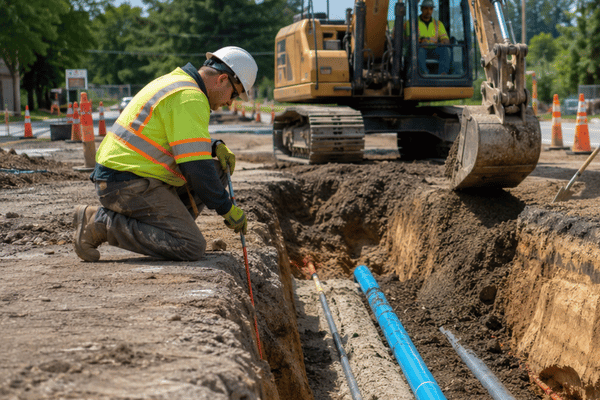
Utility trenching is more than digging a line through dirt. It takes planning, safe work, soil leveling, backfill, and final grade work. A skilled trenching contractor helps protect people, buried lines, and the site work construction that comes next.
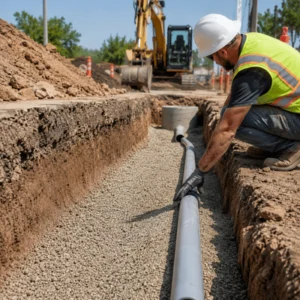
Utility trenching covers each step needed to place lines below ground. This may include water lines, sewer lines, gas lines, power lines, or fiber cable.
A proper job may include:
The Common Ground Alliance reported 196,977 known utility damage events in 2024. Many were tied to known causes, such as no locate request before digging.
That is why safe utility trenching starts before the first scoop of soil moves.
Soil leveling helps create a smooth work area before digging starts. Grading shapes the land so water flows the right way.
Both steps matter in utility trenching. Poor prep can lead to uneven trench depth, water in open cuts, and poor final grade.
Good soil leveling also helps the trenching contractor keep the work clean and steady. It supports safer site access and helps the next trade start on time.
For site work construction, this early step can prevent costly fixes later.
When workers neglect fundamental safety precautions, trench work can be dangerous. For trench and dig work, OSHA has explicit regulations.
Check for buried utilities before excavation begins.
Place spoil heaps at least two feet from the trench edge.
Use secure exits for trenches four feet deep or more.
Examine trenches each day and after rain or water issues.
Check deeper trenches for gas or low oxygen risks.
Use protection for trenches five feet deep or more.
Important safety precautions consist of:
Trenches 20 feet deep or more need a system designed by a registered engineer. This rule helps protect crews when trench depth adds greater risk.
A trained trenching contractor knows these safety steps and plans the work around them.
Poor backfill can cause the ground to sink after the job ends. This can damage driveways, slabs, sidewalks, and utility lines.
Good utility trenching uses backfill in layers called lifts. Each lift is placed, shaped, and packed before the next one is added.
Strong backfill work may include:
ASTM standards such as D698, D1557, and D6938 are used in many projects for soil test work. The right test depends on the soil, the site, and the project spec.
This is a key part of site work construction because the ground must hold up after the crew leaves.
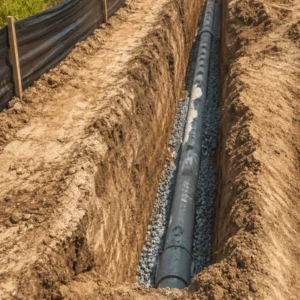
Open trenches and loose soil can create stormwater issues. Water can move dirt off-site, clog drains, and weaken fresh backfill.
According to EPA or state regulations, sites that disrupt one acre or more frequently require stormwater permit coverage. A Stormwater Pollution Prevention Plan, or SWPPP, must be created in accordance with EPA regulations prior to the submission of a permit.
Typical controls consist of:
Soil cover time limitations of seven or fourteen days are often specified by EPA regulations. Unless another authorized cover technique is employed, final cover frequently requires 70% or more plant cover.
Good drainage protects the trench, the utility line, and the rest of the site.
The right trench method depends on the site. No single method fits every job.
| Method | Best For | Main Tradeoff |
| Open-cut trenching | New sites and clear work areas | More surface repair |
| Direct burial | Long, straight rural runs | Less control near conflicts |
| Directional boring | Roads, drives, and tight areas | Higher skill and cost |
| Microtrenching | Shallow telecom in paved areas | Depth and use limits |
Open-cut utility trenching is often a good fit for new builds and open sites. Directional boring can work well when the surface must stay intact.
The Fiber Broadband Association reported a typical underground fiber cost of $18 per foot in 2025. It also said 88% of survey respondents expected costs to rise in 2026.
Clean planning becomes even more crucial as a result. Rework, delays, and preventable site damage are all decreased by a cautious trenching contractor.
Digging a trench for a subterranean utility line is known as utility trenching. Finding lines, excavation, bedding, pipe or conduit placement, backfilling, and final grade work are a few examples. Every step contributes to safeguarding the ground above the line.
Before the trench is cut, leveling the soil aids in creating a stable work surface. Additionally, it aids in final grade, drainage, and depth control. Without it, the trench might be uneven and more difficult to repair.
Not all trenches need the same system. OSHA requires cave-in protection for trenches 5 feet deep or more, unless the trench is in stable rock. A competent person may also require protection for shallower trenches when risk is present.
Backfill is done in layers so the soil can be packed well. One large dump can settle over time and leave low spots. Layered backfill helps protect roads, pads, yards, and utility lines.
Directional boring works well when crews need to avoid surface damage. It is often used under roads, driveways, sidewalks, and finished yards. It can cost more, but it may reduce repair work.
Yes, erosion control is often needed when soil is disturbed. Larger sites may need stormwater permit coverage and a SWPPP. Controls help keep soil on-site and protect drains, ditches, and nearby water.
Proper utility trenching protects your site, your schedule, and the people doing the work. Shilling Excavation brings the field skill, safe work habits, and site work know-how needed for clean trenching, soil leveling, and site work construction. For a safer start and fewer costly fixes, trust the crew that knows how to do the job right.
Ready to get your trench work done right the first time? Book a site visit with Shilling Excavation today and get a clear estimate for your utility trenching, soil leveling, and site prep needs.