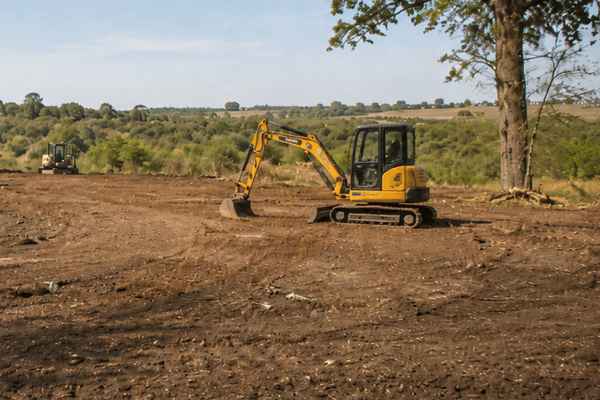
Professional land clearing services are typically the first stage in building a home, preparing a ranch, or resolving drainage issues. However, clearing entails more than simply cutting down trees. A good contractor plans for utilities, erosion control, debris disposal, and the next steps, such as excavation, grading, or pad preparation. Incorporating land clearing services into a comprehensive site preparation strategy results in a more streamlined and cost-effective project.
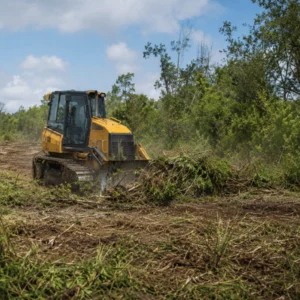
Most property owners search for land clearing near me when they are:
Developers and general contractors also rely on land clearing contractors to make sites safe and buildable before other trades begin. Shilling Excavation has served Central Texas since 1992 with clearing, excavation, grading, and site prep built into one coordinated process.
Professional land clearing services typically cover:
The scope of work is determined by your end goal. A homesite pad requires complete stump and root removal. A ranch fence line may just require selective bush clearance. Knowing your next step allows your contractor to choose the best method and sequence.
There is no single per-acre number that fits every job. According to consumer pricing guides like Angi and HomeGuide, here are typical 2026 planning ranges:
| Work Type | Typical Range |
| General land clearing | $1,397 to $6,172 per acre |
| Lightly forested acreage | $733 to $2,333 per acre |
| Heavily wooded acreage | $3,395 to $6,155 per acre |
| Forestry mulching | $400 to $800 per acre (avg.) |
| Rough grading | $1.00 to $2.00 per sq. ft. |
| Finish grading | $0.40 to $1.00 per sq. ft. |
These are ranges for planning, not quotes. The main cost drivers are:
A site visit is the only reliable way to get an accurate number. Get a free estimate from Shilling Excavation before you plan your budget.
This approach chops and shreds plants in a single pass. It's ideal for brushy acreage, selective clearing, and right-of-way work.
Dozers and excavators are ideal for heavier timber, huge stumps, and a complete site makeover. This approach is the most adaptable, although it causes the most soil disturbance.
Herbicides are used to control regrowth following mechanical cleaning. The EPA makes it clear that the pesticide label is legally enforceable.
Burning can help reduce fuel consumption on rural properties, but there are limitations. Land-clearing materials in Texas can only be burned on the clearing site.
This approach chops and shreds plants in a single pass. It's ideal for brushy acreage, selective clearing, and right-of-way work. The Texas A&M Forest Service adds that leaving mulched material on site can improve moisture retention and minimize erosion. It is a common alternative when burning is not an option.
Dozers and excavators are ideal for heavier timber, huge stumps, and a complete site makeover. This approach is the most adaptable, although it causes the most soil disturbance. Erosion controls and correct sequencing are important here.
Herbicides are used to control regrowth following mechanical cleaning. The EPA makes it clear that the pesticide label is legally enforceable. Restricted-use goods require a Texas Licensed Pesticide Applicator. This strategy is best used as a follow-up, not as a standalone solution.
Burning can help reduce fuel consumption on rural properties, but there are limitations. Land-clearing materials in Texas can only be burned on the clearing site (per TCEQ regulation). Local burn bans can halt a project unexpectedly. It is rarely an appropriate lead option near homes or neighbors.
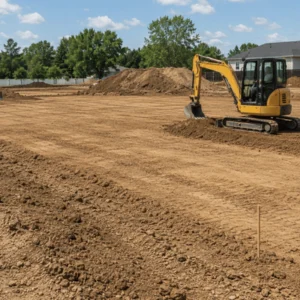
Clearing is not enough for the majority of setups. Excavation services near me perform pads, cut/fill trenches, ponds, and foundations once the land has been cleaned. Grading comes next in order to establish a stable surface, correct slopes, and shape drainage.
The three stages must be coordinated. In order to prevent rework, safeguard erosion controls, and keep your project on schedule, land clearing companies that also perform excavation and grading can plan the job. All three are completed internally by Shilling Excavation, which saves time and eliminates coordination issues.
Before any equipment moves, check these critical items:
Permitting can add weeks to a schedule. Building it into your timeline early avoids costly delays.
Land clearing services typically include brush and tree removal, stump and root work, and debris handling through mulching, haul-off, or on-site burning. Some contractors also include first-pass grading and erosion control. The exact scope depends on your site conditions and what you plan to build.
Consumer pricing guides place most professional land clearing in the range of $1,397 to $6,172 per acre. Light brush costs less, while dense woods, rocky soil, or heavy stump work push costs higher. Always get a site-specific quote because acreage alone does not tell the full story.
It is dependent on the job. Forestry mulching is ideal for selective clearing, brush control, and no-burn conditions. Dozer clearance is more effective for handling large timber and full-scale site modification. Many projects combine the two, with mulching first and mechanical labor used when pads, roadways, or utility areas require complete root removal.
It is determined by the size of your project and its location. Federal stormwater permits are normally required for projects that disturb one acre or more. Wetlands or streams may require additional Section 404 permits. Local county and city ordinances can provide additional levels. A qualified land clearing contractor can assist you in determining what applies.
Under perfect conditions, a good crew can clear an acre in approximately two to twelve hours. Light brushing with small amounts can be one to three days. Dense, multi-acre areas could take many weeks. After clearing, excavation can take anywhere from a few days to a few weeks, depending on the scale of the operation and the soil conditions.
On most projects, excavation is done almost immediately after clearance, especially where pads, trenches, or cut/fill work is required. Grading is carried out after excavation to create drainage and a stable surface for construction. Staying with the same contractor for all three phases helps eliminate rework and keeps your timetable on track.
Shilling Excavation has provided land clearing services, excavation, grading, and full site prep across Central Texas since 1992. We plan the clearing, excavation, and grading together so your project moves forward without delays.