The foundation of any successful construction is proper grading and excavation. The earth must be molded, tested, and stabilized before a single wall is constructed. Ignoring this step results in expensive repairs, flooding, and foundation failure. Expert grading and excavation set the stage for all that comes after, whether you're building a house or a business.
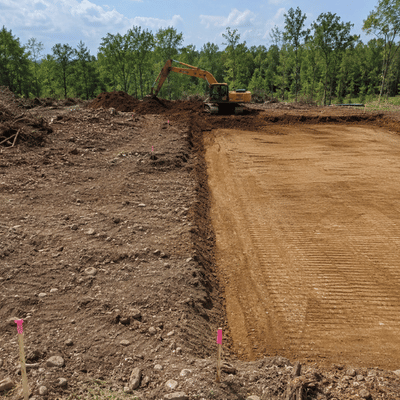
Raw land is rarely ready for construction. A qualified site work contractor clears brush, removes trees, and levels the ground. This process is called soil leveling, and it shapes the land to meet design plans.
Uneven ground causes uneven loads. This causes foundations to crumble and slabs to shift over time. Proper construction site preparation ensures that each pad and footing is on a consistent, solid foundation.
Not all soils behave the same way. Clay expands when wet and contracts when dry, exerting pressure on slabs and foundations. Sandy soils can shift under heavy loads. Organic soils compress with time and are not suited for construction.
A geotechnical test classifies your soil before any grading and excavation begins. This helps crews choose the right compaction method and equipment for the job.
Once the soil is graded, it must be compacted in layers called lifts. Compaction increases load-bearing capacity and prevents settlement. According to the Multiquip Soil Compaction Handbook, poor compaction leads to foundation cracks and pipe breaks.
Crews use vibratory rollers or rammers to achieve 90-95% of the soil's maximum density. A licensed inspector tests each lift. Results go into a grading report, which most local authorities require before foundation work begins.
Water is one of the biggest threats to any structure. Proper grading and excavation channels run off away from buildings and traffic areas. Exterior pads are typically sloped 1-2% away from foundations.
During active construction site work, erosion controls are required by law. The U.S. EPA Construction General Permit (CGP) mandates sediment controls on any site disturbing one or more acres. These include:
After construction, permanent solutions like swales, retaining walls, and storm sewers keep sites stable long-term.
Most municipalities require approved grading and drainage plans. Federal NPDES permits apply to sites disturbing one or more acres (U.S. EPA CGP).
Trenching is one of the most hazardous construction operations according to OSHA 29 CFR 1926 Subpart P. Cave-ins are the leading cause of fatalities on excavation jobs.
Most municipalities require approved grading and drainage plans. Federal NPDES permits apply to sites disturbing one or more acres (U.S. EPA CGP). Unpermitted work can halt your project or trigger fines.
Trenching is one of the most hazardous construction operations according to OSHA 29 CFR 1926 Subpart P. Cave-ins are the leading cause of fatalities on excavation jobs. Trenches deeper than five feet require protective systems such as shoring or sloping.
A competent person must inspect each trench daily and after rain. Before any digging begins, utility locates (call 811) must be completed.
Today's grading and excavation crews use a wide range of machines:
Modern equipment has GPS and grade-control systems built in. These allow automatic blade positioning without manual staking. Caterpillar's D8 XE electric-drive dozer uses in-cab design surfaces and moves 6% more material per hour than older models.
Drones now survey sites faster and more accurately than traditional methods. They generate 3D terrain models used to calculate earthwork volumes. The construction drone market is projected to reach $12 billion by 2027 (UAV Coach, 2026).
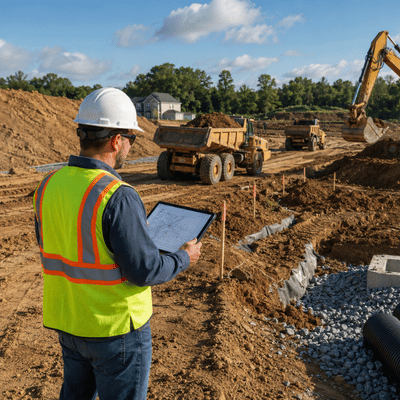
Wet weather can delay any phase. Plan buffers and coordinate permit reviews early.
Shilling Excavation has served Central Texas since 1992. We specialize in grading and excavation, building site preparation, land grading, and drainage planning. Our certified crews follow OSHA, EPA, and TCEQ standards on every job. We handle permits, compaction testing, and grading reports from start to finish. Hundreds of residential and commercial sites across the region have been prepared by our team.
Ready to start your project on solid ground? Call us today to learn more. Get your free estimate now and build with confidence.
Poor grading leads to water pooling, foundation settling, and erosion damage. Slab and foundation failures are common results of skipped or substandard site work.
Most towns require approved grading and drainage plans before work can begin. Federal NPDES permits apply to any site that disturbs one or more acres.
Soil leveling is the process of cutting and filling the ground to reach the desired elevation. It ensures that every construction is built on a level, solid foundation and that water drains efficiently.
A modest residential lot may take a few days, whereas a large commercial property may take several weeks. Weather, rock conditions, and permission timelines are all factors that influence the schedule.
A professional inspector uses a nuclear gauge or sand cone to test each layer of compacted soil. The results are incorporated into a grading report, which is required by most local authorities before foundation work can begin.
DIY grading risks uneven compaction and drainage errors that lead to expensive repairs later. A qualified site work contractor ensures proper results, regulatory compliance, and a safe worksite.
Proper grading and excavation are not just prep work. It is the foundation of everything you build. Since 1992, Shilling Excavation has helped Central Texas property owners prepare residential, commercial, and agricultural sites with precise land grading, drainage planning, soil and gravel grading, parking lot grading, and new construction ground leveling.
Start your project with a site that is ready to build on. Call Shilling Excavation at 254-744-2264 today to request a free estimate and get expert land grading done right from the ground up.