Initiating a new construction project? What takes place prior to the pouring of concrete is the cornerstone of any successful construction. Construction excavation services transform undeveloped land into a site that is ready for construction. When done correctly, they safeguard your budget, timetable, and structural integrity. When done incorrectly, they result in expensive delays and rework.
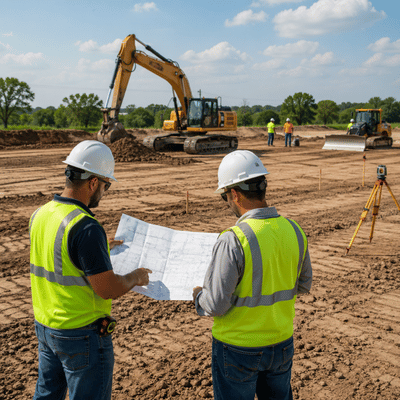
Construction excavation services go far beyond digging. They cover every phase of preparing a site for building. Here is what that looks like in practice:
Each of these steps supports the next trade on site. Skipping or rushing any one of them creates problems downstream.
Planning a new build in Central Texas? Talk with Shilling Excavation about building site preparation services, grading, and utility-ready excavation.
Good construction site work follows a clear sequence. Here is how a typical project flows from raw land to a finished pad:
Modern construction excavation services use GPS machine control and drone surveys to improve accuracy and reduce rework. A 2025 peer-reviewed study found UAV earthwork volume models within 5% tolerance while improving time and labor efficiency.
Need a contractor who evaluates drainage, soil conditions, and excavation sequencing before work starts? Request a project review with Shilling Excavation.
In recent studies, 92% of construction companies said they had trouble hiring workers, and 45% said that labor shortages caused project delays, according to AGC and NCCER. These are the most frequent issues with site work, aside from staffing:
Experienced excavation contractor services identify these risks before mobilization, not after.
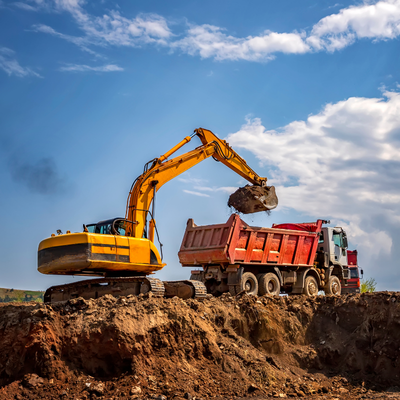
Not all excavation contractor services are equal. Here is what matters when evaluating a partner for site work construction:
Shilling Excavation serves developers and general contractors across Central Texas. From land grading and land clearing to full commercial site preparation, the team brings hands-on site knowledge and real project accountability.
Construction excavation services cover site clearing, rough grading, foundation and utility trenching, dewatering, compaction, and final grade. The goal is a stable, build-ready pad handed off to the next trade.
Timeline depends on site size, soil conditions, and groundwater. A simple pad may take days. A complex commercial site can take several weeks. Early site assessment is the best way to get an accurate schedule.
Yes. TCEQ requires a Construction General Permit for any site disturbing one acre or more. A written Stormwater Pollution Prevention Plan (SWP3) must be in place before ground is broken.
OSHA defines a competent person as someone who can identify existing and predictable hazards and has the authority to take corrective action. They must inspect the trench before entry and after any weather event.
A qualified contractor will perform proof rolling and field density testing. A flat surface is not enough. The subgrade must meet compaction specs verified by testing, not just visual inspection.
Cut and fill means balancing the soil removed from high areas (cut) with soil added to low areas (fill) on the same site. Good cut/fill planning reduces trucking, lowers cost, and speeds up the schedule.
At Shilling Excavation, your project is backed by a local, family-owned Central Texas team that has been delivering excavation work since 1992. With decades of hands-on experience in site preparation, grading, drainage, and excavation, the crew brings the planning, equipment, and site knowledge needed to keep work safe, efficient, and build-ready. When the groundwork is done right from day one, every phase that follows has a stronger start.
Do not let poor site prep, drainage issues, or excavation delays put your project behind schedule. Request your free estimate from Shilling Excavation today and put an experienced Central Texas crew to work on your pad prep, grading, and excavation before small problems turn into costly setbacks.