In order for construction to begin on time, securely, and neatly, a site work contractor prepares the land. Clearing, grading, drainage, soil preparation, and excavation are all necessary before a building pad, driveway, foundation, or utility trench is installed. In Texas, this job also entails site access, rock, clay soil, stormwater requirements, and 811 utility regulations.
A site work contractor gets raw or rough land ready before the main build begins. This is the work that makes the ground safe, stable, and usable.
Site work is more than digging. It connects many early steps into one plan.
Our site work may include:
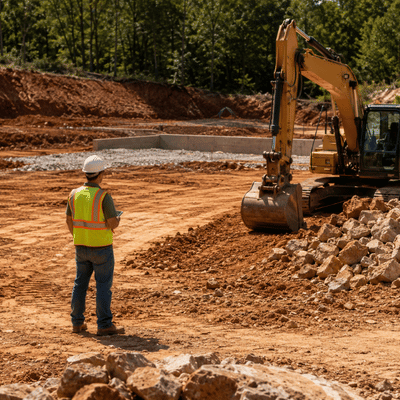
Site work is more than digging. It connects many early steps into one plan.
Our site work may include:
The EPA says construction activity can include clearing, grading, and excavating. That is why good site prep should be planned as one full process.
For homeowners, ranchers, builders, and developers in Central Texas, this early work can shape the whole project.
The first step is a site review. We look at the land, access points, slope, trees, brush, rock, low areas, and drainage needs. We also review the planned use of the site.
Utility locating comes before digging. Texas811 says homeowners and contractors must contact 811 two business days before digging, not counting weekends and holidays.
This step helps mark buried lines before excavation begins. The U.S. Department of Transportation says calling 811 gives a 99 percent chance of avoiding a utility damage event.
For larger sites, stormwater rules may also apply. The Texas Commission on Environmental Quality says construction activity that disturbs one acre or more may need permit coverage. Covered jobs need a Stormwater Pollution Prevention Plan before work starts.
The duration of site work depends on the property size, soil conditions, rock, weather, access, permitting, and project scope. A small residential site may take several days, while larger or more complex projects can take several weeks.
| Site Work Stage | Typical Duration |
| Site review and planning | 1 day |
| Utility locating through Texas 811 | At least 2 business days |
| Clearing brush, trees, and debris | 1 to 3 days |
| Rock removal and soil preparation | 1 to 5 days |
| Rough grading and drainage work | 1 to 4 days |
| Excavation for pads or utility trenches | 1 to 5 days |
| Compaction and final grading | 1 to 3 days |
These stages may overlap, and the timeline can change when crews encounter buried rock, unstable soil, drainage problems, heavy rain, or limited equipment access. A site work contractor should inspect the property before providing a more accurate project schedule.
After utilities are marked, site clearing can begin. This step removes anything that blocks safe access, grading, or excavation.
Site clearing may include:
Removing landscape rocks early helps the work move faster. Large rocks can block equipment, slow trenching, and cause uneven areas under pads or drives.
Texas soil can also be tricky. The USDA describes Houston Black soil as deep clay that drains very slowly. It can also shrink, crack, and swell as moisture changes.
That kind of soil can affect building pads, driveways, and drainage. Depending on the site, we may need to remove bad soil, bring in fill, adjust moisture, or compact the ground to meet the job needs.
This is why experienced site preparation contractors do more than clear land. They look at how the ground will support the work that comes next.
Grading shapes the land so water moves the right way. It helps protect the pad, driveway, yard, and nearby property.
Drainage work may include swales, ditches, slope changes, or pad shaping. The right choice depends on the land and the plans.
Controlling erosion is also important after soil disturbance. Erosion and sediment controls must be used on covered construction sites, according to the EPA. When work ceases and won't resume for more than 14 days, disturbed areas must also be stabilized.
In Texas, inadequate site preparation can cause significant delays due to rain. The site is kept safer and cleaner with proper grading and erosion control.
After clearing and grading, excavation can begin. This may include building pads, footings, utility trenches, drainage paths, and other work areas.
Each cut needs to follow the project plan. Depth, slope, soil type, and access all matter.
| Site Work Stage | Main Goal |
| Utility locating | Protect buried lines |
| Site clearing | Remove trees, brush, rock, and debris |
| Rock and soil work | Build stable ground |
| Grading and drainage | Move water away from key areas |
| Excavation | Prepare pads, trenches, and work areas |
| Compaction | Create a firm base |
Safety stays important during excavation. CDC/NIOSH says workers should never enter an unprotected trench. OSHA rules require a protective system for excavations 5 feet deep or deeper, unless the trench is made in stable rock.
Hasty site work may result in issues that subsequently cost more. Many problems arise once additional staff have arrived on the scene.
Typical dangers consist of:
The entire build may be slowed down by these issues. A well-defined site preparation plan helps prevent unforeseen events before they impact the timeline.

Site work is still in high demand. The U.S. Census Bureau reported construction spending at a $2.172 trillion annual rate in April 2026. The Bureau of Labor Statistics counted about 8.34 million construction workers in May 2026.
Busy construction schedules make early prep even more important. A delay in clearing, grading, or excavation can affect every crew that comes after.
Rules are active too. TCEQ began the renewal process for the Texas construction stormwater general permit in 2026. PHMSA also issued a 2026 bulletin urging stronger excavation damage prevention as infrastructure work grows.
Technology can be useful. Drones can help with progress inspections and mapping. Crews can more precisely shape pads and slopes with the aid of grade-control instruments.
Still, the fundamentals are most important. Reliable site work is built on safe excavation, decent grading, adequate drainage, and appropriate soil preparation.
Before building begins, a site work contractor prepares the land. Clearing, grading, drainage, access, excavation, and utility-related preparation are all part of the operation. These actions improve the site's security and ease of development. They also aid in avoiding delays in the future.
Site work removes problems before they slow the job. It checks utilities, soil, drainage, access, rock, and grade needs. It also gives foundation and utility crews a stable place to work. Good prep lowers the risk of rework.
Utility location and a site review are the first steps in the procedure. After that, workers take care of grading, drainage, soil preparation, rock removal, and site clearing. Excavation for pads, footings, and utilities can then start. Compaction and final grading aid in completing the base.
No. One aspect of site work is excavation. Clearing, grading, drainage, access roads, erosion management, and soil preparation are further aspects of site work. A comprehensive site preparation plan considers the entire property. Digging and sculpting specific areas are the main goals of excavation.
Indeed, effective site work can avoid a lot of delays. Before other teams arrive, it assists in locating rock, poor soil, drainage problems, and underground utilities. It also aids in adhering to stormwater and safety regulations. As a result, there are fewer surprises and the build continues.
It's important to remove landscape rocks since they can obstruct trenching and grading. Additionally, it may leave uneven patches beneath driveways, access roads, and pads. Buried rock is prevalent in some areas of Central Texas. Early removal keeps the site level, safe, and ready for construction.
Strong construction starts with strong site work. Before building begins, the land needs safe access, stable soil, clear drainage, and proper excavation. In Texas, good prep also helps manage rock, clay, stormwater, and buried utility risks.
Ready to prepare your land the right way? Get a Quote from Shilling Excavation today or learn more about our building site preparation services.