Site preparation contractors get land ready before crews build on it. They clear debris, shape the ground, manage drainage, compact soil, and prepare utility areas. This early work helps prevent weak foundations, standing water, permit delays, and costly rework.
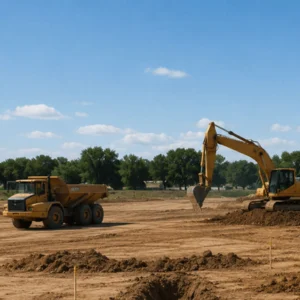
Site work construction covers the ground-level work done before a building starts. It may include site clearing, grading, excavation, drainage, soil compaction, and utility trenching.
A site work contractor prepares the land based on plans from engineers, surveyors, and local code rules. The goal is simple. The site must be safe, stable, and ready for the next stage of work.
Common site work construction tasks include:
Residential, commercial, agricultural, and light industrial projects can all get off to a strong start with proper site work construction.
Site preparation contractors handle the physical work that turns raw land into a build-ready site. They use heavy equipment such as excavators, dozers, graders, compactors, and loaders.
They may also help coordinate with surveyors, engineers, utility locators, inspectors, and general contractors. This keeps the job safer and helps the project meet local rules.
A site work contractor does not replace the general contractor. The general contractor often manages the full build. The site work contractor focuses on the land, soil, drainage, access, and underground prep.
This work matters for many project types. A home needs a stable pad. A shop needs proper access and drainage. A farm building may need grading, culverts, and road prep. A commercial site may need erosion controls, stormwater planning, and utility trenches.
Site preparation contractors usually follow a clear process. The exact steps depend on the land, soil, project size, and local rules.
| Step | What Happens | Why It Matters |
| Site review | The land, slope, access, and soil risks are checked | Helps plan safe, accurate work |
| Utility locating | Underground lines are marked before digging | Helps prevent strikes and delays |
| Site clearing | Trees, brush, debris, and old materials are removed | Opens the area for grading |
| Rough grading | Soil is moved to shape the site | Creates the right base and slope |
| Drainage prep | Swales, ditches, culverts, or drains may be added | Helps move water away |
| Compaction | Soil is packed and tested when required | Helps support slabs and foundations |
| Final grading | The site is finished to the planned elevations | Gets the area ready for building |
The first step is checking the land. Crews look at slope, access, soil, water flow, and site limits. Survey data may be used to confirm property lines and planned elevations.
Before digging, underground lines must be marked. 811 states that anyone planning to dig should contact 811 before work starts. State rules set the exact notice time and process.
Everything that obstructs safe work is removed during site clearing. Brush, trees, stumps, boulders, old concrete, sheds, and trash are some examples of this.
Crews may grade and excavate more carefully when the ground is clean. Additionally, it reduces the possibility that buried debris will result in equipment problems or soft spots.
Crews fill low sections and trim high ones during rough grading. They sculpt the terrain such that water flows away from the intended building.
Drainage work may include swales, culverts, ditches, gravel drains, or stormwater controls. On many jobs, erosion control is added to keep soil from washing away.
Loose or weak soil can settle after construction. That can lead to cracks, uneven slabs, and drainage problems.
Compaction packs the soil to a target set by the engineer, plan, or local code. Some projects require testing before concrete work can begin.
If the soil is too soft, crews may remove and replace it. They may also use gravel, geotextile fabric, or other approved methods to improve the base.
Final grading brings the site close to the planned height and slope. Crews may dig footings, trenches, pads, and access paths.
At this stage, the site should be clean, stable, and ready for the next trade. Good final prep helps concrete crews, utility crews, and builders work with fewer delays.
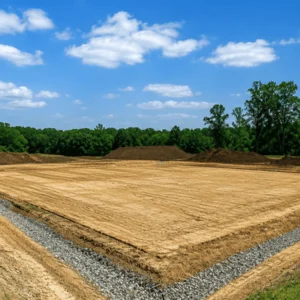
Inadequate site preparation can subsequently result in significant harm. Uneven settling, broken slabs, and water problems can all result from a poor base.
The following are typical dangers of inadequate site preparation:
Permit and safety regulations also apply to site work. Trenches that are five feet deep or deeper must have a protection system, according to OSHA, unless they are entirely composed of stable rock. Additionally, OSHA cautions that one of the biggest risks associated with excavation activities is trench collapses.
Stormwater rules matter too. The EPA says construction activity that disturbs 1 acre or more usually needs stormwater permit coverage under the Clean Water Act. Smaller sites may also need coverage if they are part of a larger plan.
This is why a trained site work contractor is important. The work is not just digging dirt. It affects safety, drainage, code needs, and the life of the structure.
Site preparation contractors now use better tools to plan and check their work. These tools help improve speed, safety, and accuracy.
Drone mapping can help capture site data quickly. It can support maps, volume checks, and cut-and-fill planning. With the right control points and process, drone data can be very accurate.
GPS machine control is also common on larger jobs. It helps operators grade closer to the plan and reduce rework.
Smart compaction tools can track roller passes and soil response. This helps crews see which areas may need more work.
Electric equipment is also growing in some markets. Major equipment makers, including Komatsu, have added battery-electric machines for select job types. These can help on sites where noise or exhaust is a concern.
Deloitte’s 2026 Engineering and Construction Industry Outlook also points to AI tools, robotics, autonomous equipment, and digital twins as trends shaping construction work. These tools may help with cost control, safety, and scheduling.
A site work contractor focuses on land, soil, grading, drainage, and underground prep. A general contractor manages the larger build. Many general contractors hire site preparation contractors before foundation work starts.
It depends on the size, weather, soil, access, and scope of work. A small residential site may take a few weeks. Larger commercial or rural projects can take several months.
Site clearing removes trees, brush, rocks, old pavement, trash, and other items from the land. It is often the first physical step in site prep. Clear land helps crews grade and excavate with better control.
Many projects need soil testing or compaction checks. The need depends on local code, project type, and the engineer's plans. Testing helps confirm that the soil can support the planned structure.
Some work can continue in light rain. Still, very wet soil may not compact well. Skilled contractors may pause certain work and protect the site with erosion controls.
Some contractors help coordinate permits, inspections, utility locating, and erosion controls. The owner, engineer, or general contractor may also handle parts of this process. The best approach is to confirm duties before work starts.
Site preparation sets the base for a safe and steady build. Good site clearing, grading, drainage, compaction, and utility prep help prevent delays and costly repairs. A skilled site work contractor can help keep the project safe, clean, and ready for construction.
Planning a new build, driveway, shop, or land project? Contact Shilling Excavation to schedule a site review and get a clear quote for your site preparation work.